Minimal Smart Speaker (Concept)
Product concept · Industrial design
Year
'25
Role
Product Concept · Visual Design · AI-assisted Visual Production
Tools
Adobe Firefly (Image & Video), Photoshop
A screen-free speaker concept that communicates through light and motion.
Challenge
Smart speakers increasingly rely on screens, notifications, and explicit interfaces—often competing for attention in quiet home environments.
The challenge was to explore an alternative interaction model: a smart speaker that communicates system state without screens, using ambient feedback that remains perceptible in the background while staying present but unobtrusive within architectural spaces.
Approach
The concept explores an alternative interaction model for voice-first systems, focusing on how system state and feedback can be communicated without relying on screens or explicit interface elements.
Unlike screen-based smart assistants that frequently seek user attention, this approach investigates a quieter interaction model—where feedback is situational and responsive rather than directive.
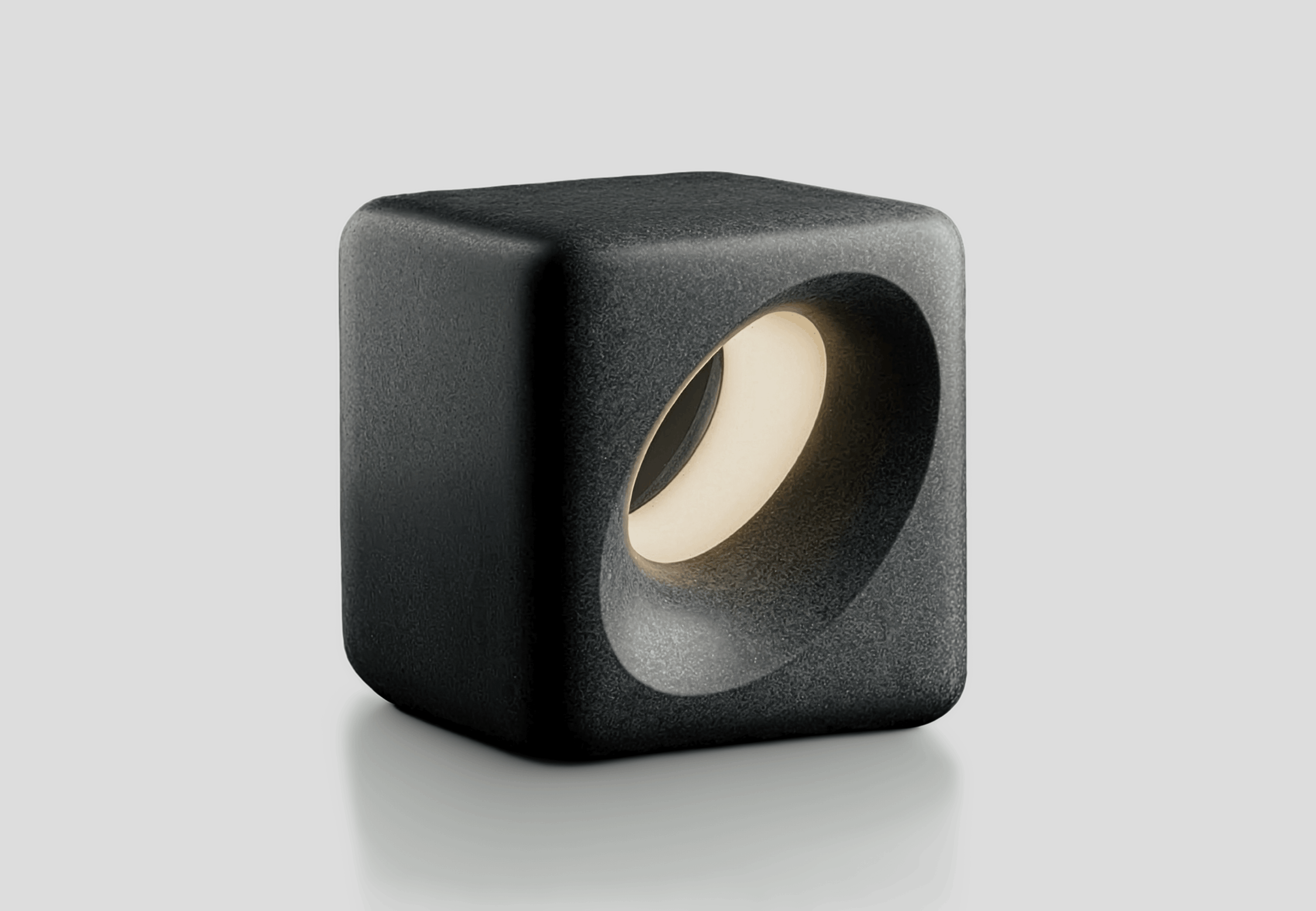
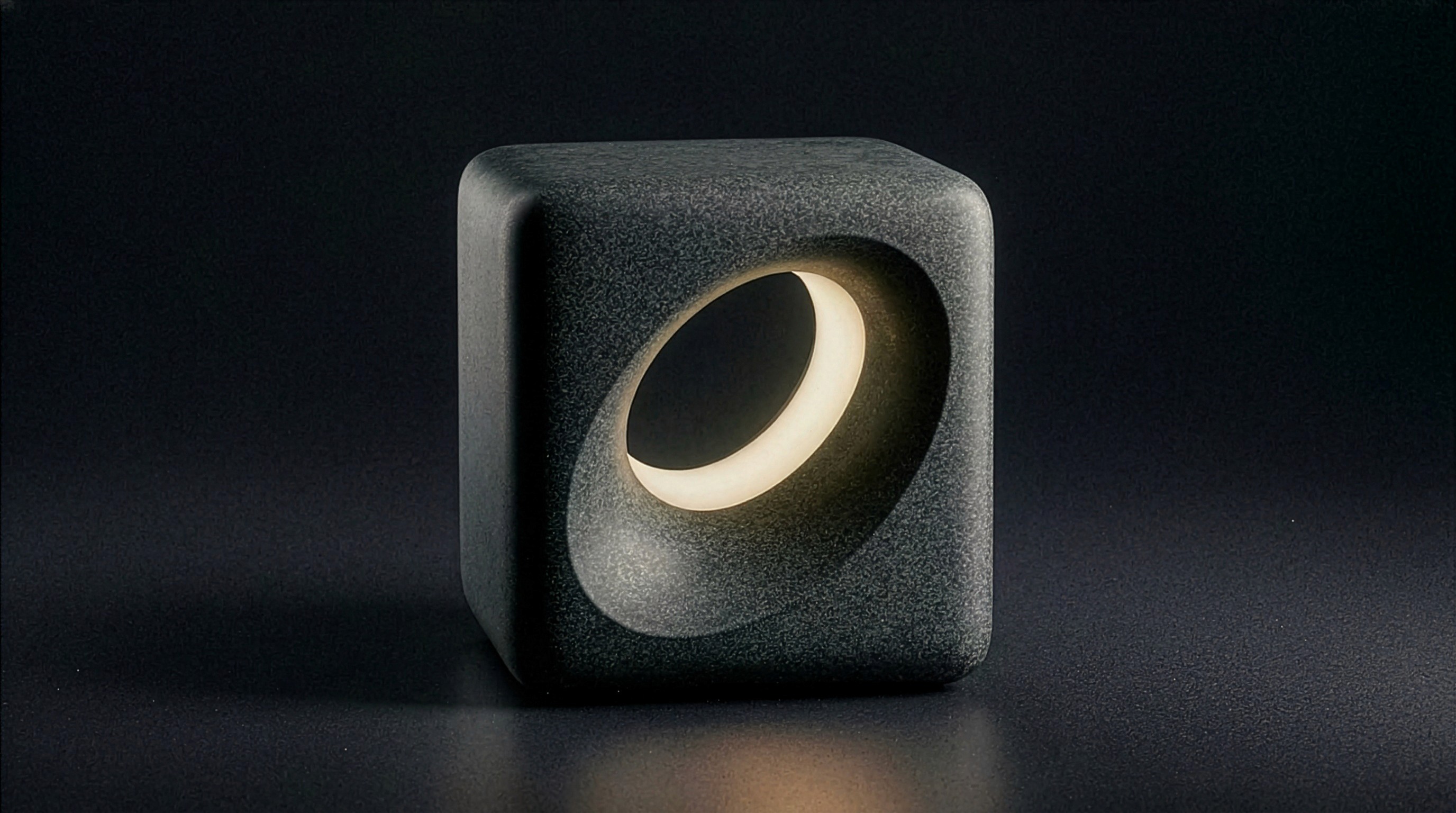
The form was designed as a calm, architectural object intended to blend into its surroundings. A recessed light surface communicates listening, processing, and response states through tone, intensity, and slow light transitions—without demanding focused attention.
Subtle acoustic perforations signal sound output while maintaining a visually quiet surface.
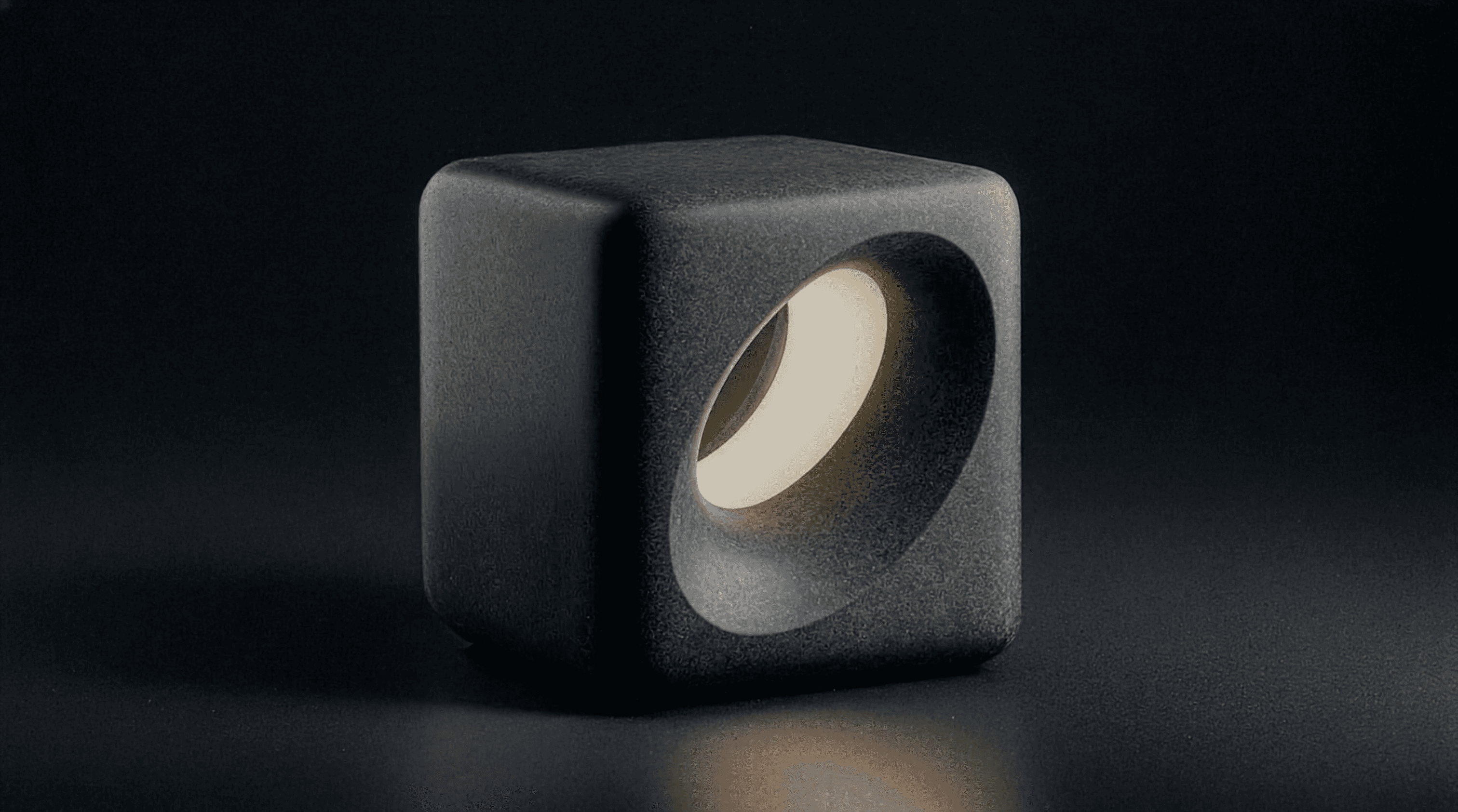
Recessed light cavity designed to soften illumination and avoid glare
AI-Assisted Visual Production
AI-assisted image and video generation were used as a rapid visual prototyping layer to explore lighting behavior, material response, and temporal states.
Rather than producing a single output, the workflow emphasized iterative refinement—guided by human-led design decisions at each stage.
AI functioned as a production accelerator, not a design author.
Outcome
The final concept presents a calm, screen-free smart speaker that communicates system state through ambient cues rather than explicit interfaces.
The project demonstrates how interaction design can reduce cognitive load while remaining perceptually legible and architecturally integrated within everyday spaces.
Ambient feedback demonstrated through gradual changes in light intensity (looped).
Challenge
Smart speakers increasingly rely on screens, notifications, and explicit interfaces—often competing for attention in quiet home environments.
The challenge was to explore an alternative interaction model: a smart speaker that communicates system state without screens, using ambient feedback that remains perceptible in the background while staying present but unobtrusive within architectural spaces.
Approach
The concept explores an alternative interaction model for voice-first systems, focusing on how system state and feedback can be communicated without relying on screens or explicit interface elements.
Unlike screen-based smart assistants that frequently seek user attention, this approach investigates a quieter interaction model—where feedback is situational and responsive rather than directive.
The form was designed as a calm, architectural object intended to blend into its surroundings. A recessed light surface communicates listening, processing, and response states through tone, intensity, and slow light transitions—without demanding focused attention.
Subtle acoustic perforations signal sound output while maintaining a visually quiet surface.
Recessed light cavity designed to soften illumination and avoid glare
AI-Assisted Visual Production
AI-assisted image and video generation were used as a rapid visual prototyping layer to explore lighting behavior, material response, and temporal states.
Rather than producing a single output, the workflow emphasized iterative refinement—guided by human-led design decisions at each stage.
AI functioned as a production accelerator, not a design author.
Outcome
The final concept presents a calm, screen-free smart speaker that communicates system state through ambient cues rather than explicit interfaces.
The project demonstrates how interaction design can reduce cognitive load while remaining perceptually legible and architecturally integrated within everyday spaces.
Ambient feedback demonstrated through gradual changes in light intensity (looped).
2025
New Zealand Naturals: Frozen Yogurt Bars
Interaction & Motion Design